
It takes some serious patience to find the Whipstick’s twig-mimicking Katydid. For obvious reasons. But there’s not much about the forest on Eaglehawk’s fringe that evades Michael Barkla.
The BCHS client of almost 50 years – and local field naturalist – has spent decades documenting this rarest of environments, and its beasts big and miniscule. From the giant remnant ironbarks to the tiny twiggy camouflaged, and everything in between.
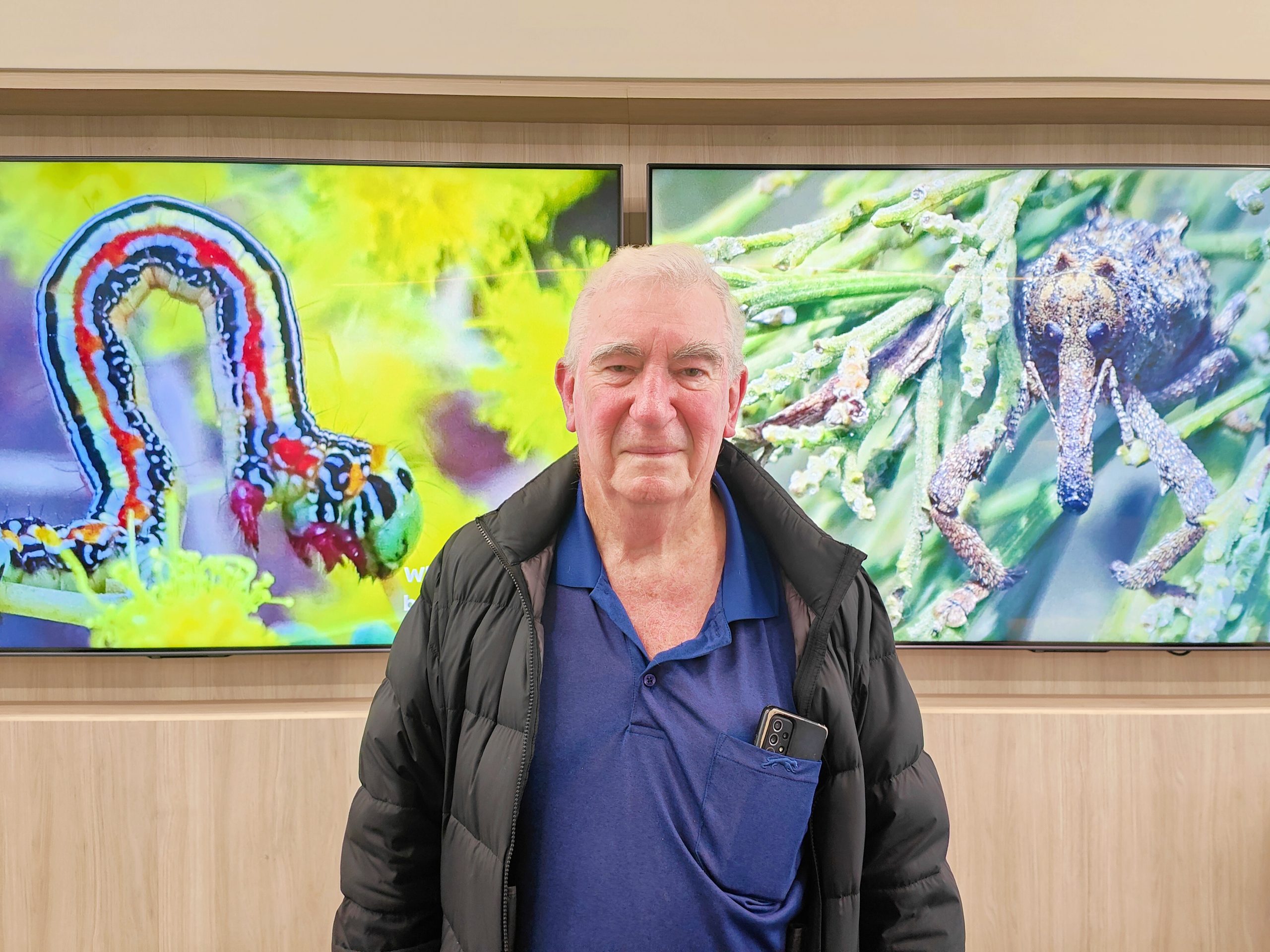
A selection of Michael’s photographs of Whipstick invertebrates and flora are currently on show in the BCHS Eaglehawk site, delighting clients and staff. But there’s a higher purpose to the digital display.
“There’s such a range of insects that exist there, and I feel a need for people to know about them,” Michael says of sharing his work.
He says knowledge leads to care, and in his case, a life-long passion to protect the forest.
Michael says drought conditions over the past ten years have drastically cut the Whipstick’s flying biomass and fragile flora – put further at risk by fire, whether natural or managed burns. And so, he shares his passion in a bid to protect the bush.
“I’ve got evidence of nearly 530 invertebrate species that I’ve identified in there,” he says.
“It’s unique. There’s nowhere else in the world where this group of insects and spiders are together.
“Identifying them is part of the fun. There’s up to seven species in there that have not been found anywhere else in Victoria.”
Such as the aforementioned Katydid (zaprochilus australis)– otherwise existing in southern QLD and northern NSW.
“It’s a matter of going out there and looking and looking and looking, and you’ve got to be patient,” he says. “You’ve got to have a lot of patience to photograph them.”
Michael says bringing a little bit of the Whipstick to community is a way for others to see and appreciate its charms – which aren’t always evident to the uninitiated.
“I was brought up in the bush around Castlemaine and Newstead. When we came up here in the 70s, I was into photographing birds – I walked into the Whipstick and it freaked me out,” he says on the foreboding feeling of the dark tree trunks and turned-over earth from old gold days.
“It wasn’t what I was used to. Do you know why it feels like that? It’s all the damage that’s been done in there … It took me five or six years to be accepted by the Whipstick and to feel comfortable in it.”
View the weird and wonderful, from jewelled beetles to bright butterflies, delicate orchids to wingless moths, now on the big screens in our waiting room. With thanks to Michael for sharing his beautiful work.
By Lauren Mitchell