Bendigo Community Health Services’ InRoads program is taking some of the city’s most vulnerable people from the “too hard basket” into the health care system.
The InRoads team connects people at risk of or experiencing homelessness to health services. Over the past year, InRoads community connectors at Bendigo Library and BCHS’ Hargreaves St site, plus a dedicated nurse practitioner have:
- Supported more than 70 people over more than 1000 hours
- Supported more than 300 appointments
- Made more than 230 internal and external referrals
- Contributed to housing stability for 14 people.
InRoads Program Leader Clare Woods said more than half the people supported had either never connected with BCHS or hadn’t received medical care for at least five years.
“This is despite people experiencing homelessness often having high levels of mental ill health, chronic disease and pain,” she said.
BCHS is highlighting InRoads’ successes in a bid to secure vital funds for its continuation.
Homelessness high in Bendigo
The most recent Census found 571 people were experiencing homelessness in Greater Bendigo: a 94 per cent increase since 2016 and four times the state average.
Clare said many of those people were in the CBD, and visited the Bendigo Library, and InRoads was designed to make it easy for them to get the right supports at the right time.
Bendigo Library a welcoming hub for all walks
Clare said libraries like Bendigo’s were community sanctuaries that fostered learning, literacy and creativity, and that welcomed everyone.
“People from all walks of life access the library for a whole range of reasons, including our clients, so it’s the ideal place to meet them,” Clare said.
“The library is a neutral place that is non-clinical. There is no triage or reception desk.
“Embedding a community connector in the library has opened a network of cross-sector relationships we couldn’t have engineered within the walls of a health service.”
Breaking barriers and building trust
InRoads also works to break down stigma around homelessness and health.
“Many of the people we support have been exposed to trauma during their childhood, or were born with conditions the health system was not designed to sustainably support,” Clare said.
“Another way of framing that is to say people experiencing homelessness were not ‘healthy until their housing ran out’.
“Their trust in the systems many of us take for granted has worn away over time.
“Our program aims to generate enough trust that re-entry into healthcare can become a tangible goal.”
Clare said the program was shifting healthcare access from the “too-hard basket” and opening multidisciplinary pathways for people.
“Due to the daily impact of homelessness, many find themselves unable to gain or sustain access to the services they need,” she said.
“The role of the community connector as a navigator, connector and coordinator for the patient, and the clinician, changes access in a very real way for everyone.
“The program acknowledges that life is messy but that shouldn’t impact people’s ability to access basic healthcare.”
Permanent funding model now needed
Work is now underway to secure funds for the program to continue past is current pilot model, which is set to expire in June, 2026.
“We’ve proven this program works, and is vitally important, not only for those it directly supports, but for the wider community too,” Clare said.
“It’s also a wonderful example of diverse organisations working together towards shared goals – in this case Bendigo Community Health Services, Goldfields Libraries and City of Greater Bendigo.”
For more information email
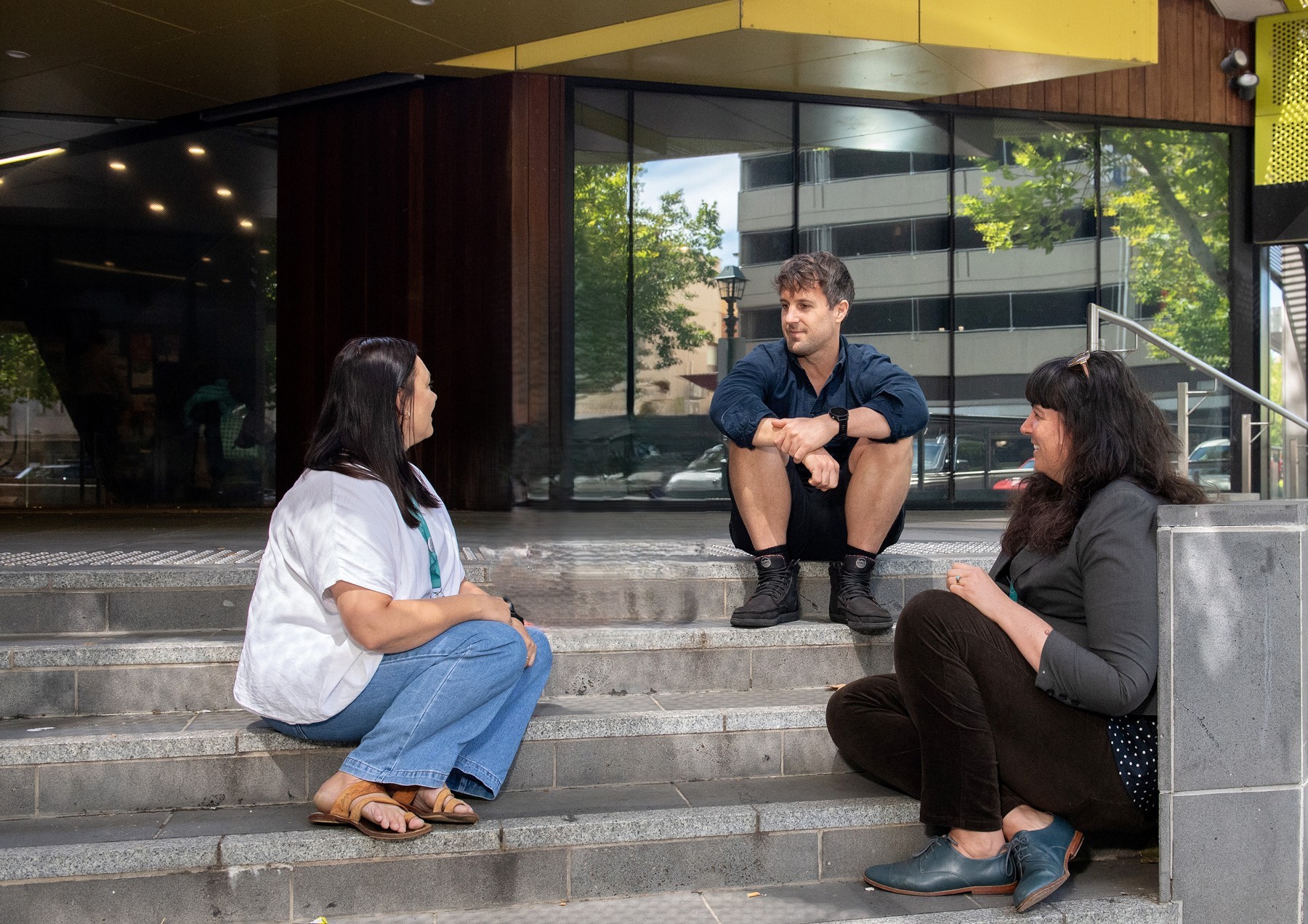
Pictured above: InRoads team Rhi, Karl and Clare on the steps of the Bendigo Library.