
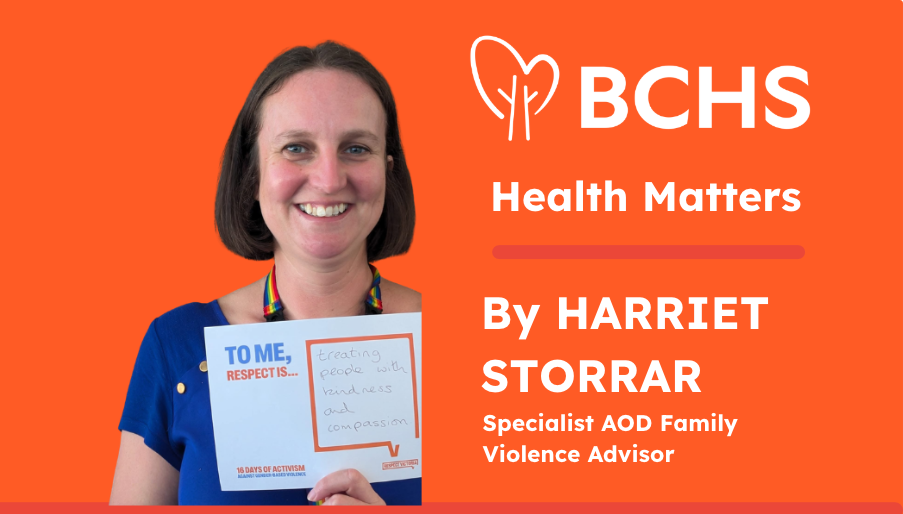
Every year, communities around the world come together for the 16 Days of Activism against gender-based violence. The campaign starts on November 25, the International Day for the Elimination of Violence against Women, and ends on December 10, Human Rights Day.
Linking the two dates is a reminder that living free from violence is a basic human right. You may see buildings lit up orange, or people wearing orange – the campaign colour that stands for a brighter future without violence.
This year, we’re using the 16 Days to talk about something that isn’t always recognised: family violence is a health issue.
Family violence affects your health
Family violence is about more than physical harm. It can affect how you sleep, how you feel, your body, and your children’s growth and wellbeing, sometimes for many years.
It is also more common than many people realise.
Intimate partner violence is the leading contributor to death, disability and illness for Australian women aged 18 to 44.
2 in 5 Australians were exposed to family violence at home as children. It is the most common form of childhood harm in Australia, and for young people aged 16 to 24 the figure rises to 44%.
That’s why we talk about it here at BCHS. If any of this feels familiar, you are not alone, and help is available.
What family violence can look like
Family violence is when a partner, ex-partner or family member behaves in ways that make you feel afraid, controlled or unsafe. It can include:
- hurting you, or threatening to hurt you, your children or your pets
- putting you down, yelling, or making you feel worthless
- controlling who you see, where you go or what you wear
- checking your phone, tracking where you are or watching you online
- controlling money or stopping you from working
- forcing or pressuring you into sex
- harming or neglecting children, or exposing them to violence.
It can happen in any family, culture or community, and between partners of any gender. It can come from a parent, an adult child, a sibling, a carer or another relative, including towards older people.
Where to get help
You can talk to any worker at BCHS.
You can also contact:
|
Who |
For |
Contact |
|
Police, ambulance |
Immediate danger |
000 |
|
Safe Steps |
Anyone experiencing family violence in Victoria, 24/7 |
1800 015 188 |
|
1800RESPECT |
Counselling and support for anyone affected 24/7 |
1800 737 732 |
|
The Orange Door |
Support for adults, children and families in Victoria, including people using violence |
1800 512 359 |
|
Men’s Referral Service |
People worried about their own behaviour |
1300 766 491 |
|
Kids Helpline |
Children and young people aged 5 to 25 |
1800 55 1800 |
How it can affect your children
Living with violence or fear keeps your body and mind under constant stress. People often notice:
- trouble sleeping, headaches or pain that doesn’t go away
- feeling anxious, low, on edge or numb
- using alcohol or other drugs to cope
- injuries, or health problems that don’t seem to get better
Children notice violence even when adults think they don’t. They may have trouble sleeping, act out or withdraw, struggle at school or kinder, or be slower to reach milestones. Growing up around violence can affect health well into adulthood. The good news is that safe, caring relationships help children recover.
Why we ask about it
Your doctor, nurse, counsellor or other worker at BCHS may ask about your relationships and whether you feel safe at home. We ask because family violence is common, often hidden, and affects health. It doesn’t mean we’ve made any judgement about you.
Many people never contact a family violence service, so a health worker is often the first person they tell. You don’t have to talk about it until you’re ready. When you do, we will listen, take you seriously, and work with you on what you want to happen next. Your worker can explain how your information is kept private, and when it may need to be shared to keep someone safe.
If you're worried about your own behaviour...
That matters too. Noticing it and wanting to change is a strong first step. You can talk with us without being judged, and we can connect you with support to change.