
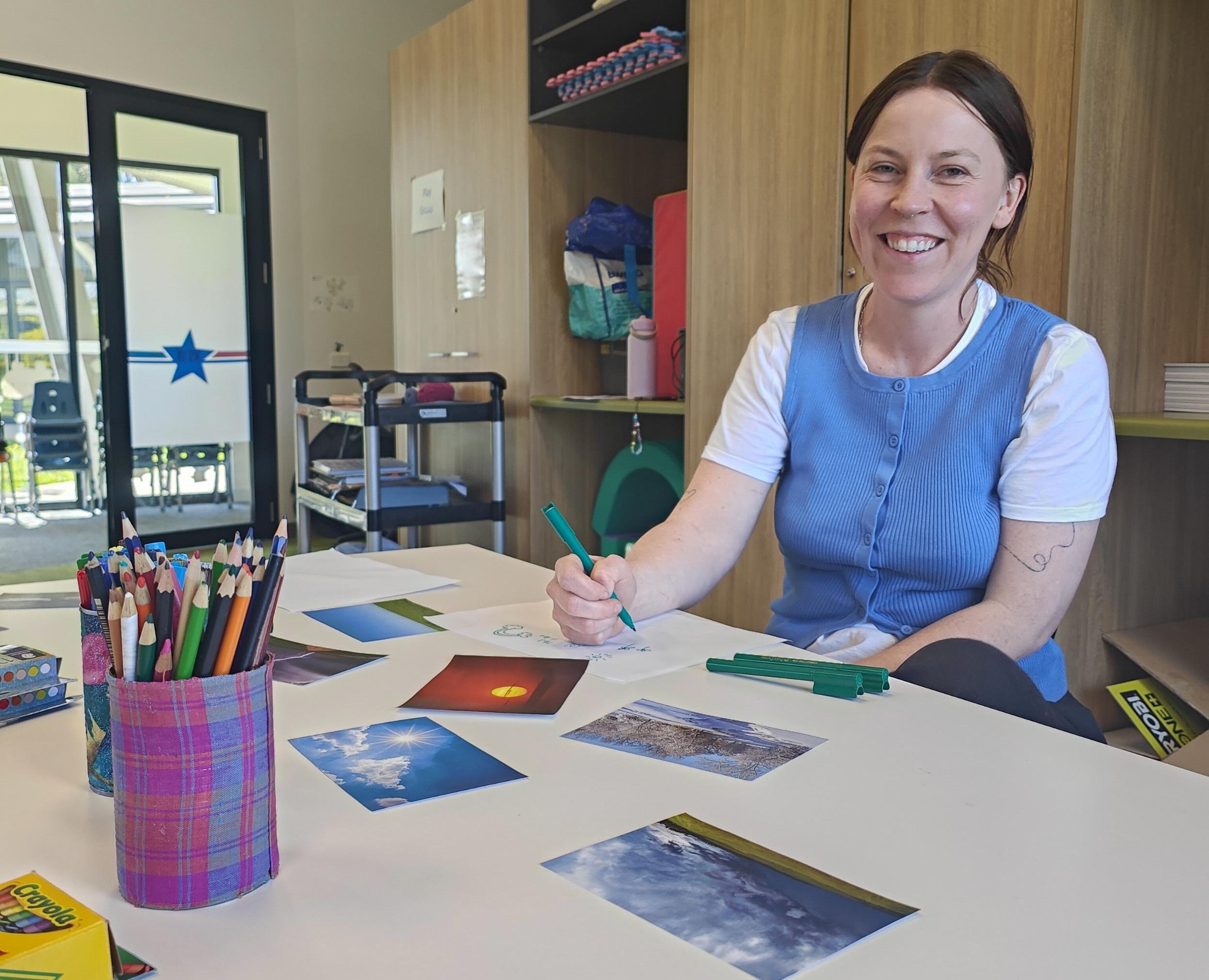
Small talk about the weather has a different meaning in Chelsea Petersen’s art therapy class.
It’s the main activity of the day with prompts, pencils and paper set up around the table to help participants create a weather report that describes how they’re feeling.
“I love using metaphors and symbolism in art therapy,” she says. “It’s a chance to express first and reflect later to decipher any meaning that you weren’t necessarily intending to put out there.”
Chelsea has brought back adult art therapy classes to BCHS’ Kangaroo Flat site for a 10-week stint as part of a placement for her Bachelor of Arts Therapy degree.
Art therapy is just one of many allied health professions that provide support for a person’s mental health and wellbeing.
It’s a break away from traditional talking therapies, providing space for people, especially adults, to show how they’re feeling instead of putting it into words. It can involve pencils, textas and paper, paint and canvas, photography, music, movement or writing, among other things.
Chelsea admits to once being a sceptic when it came to how art therapy classes could help someone.
“I went through a tough time a little while ago and a friend suggested I try art therapy and at first, I was like ‘how is drawing about my feelings going to help?’, but I did end up trying it and it blew my mind. So much so I enrolled to study it.
"It really helped me connect back within myself and find my power again after not feeling strong for a while."
It’s about process and reflection, not perfection, Chelsea believes. And if you’re thinking, ‘I’m not creative it’s not for me,’ she has advice for you.
“Trust the process,” she says.
“I always provide strengths-based activities with a variety of art materials for participants to choose from. You really don’t need to be artistic to get the benefits from art therapy. The group format of the class is where the magic can happen.
“Some classes people are quiet and just want to do the activity or their own thing, but then there’s days when the conversation flows, and there’s just something about hearing someone’s else’ story that can offer you perspective.
“Those days there’s connection, the chance to be seen and heard, and there’s also an opportunity for co-regulation, all while subconsciously processing your own emotions. It’s just so powerful.”